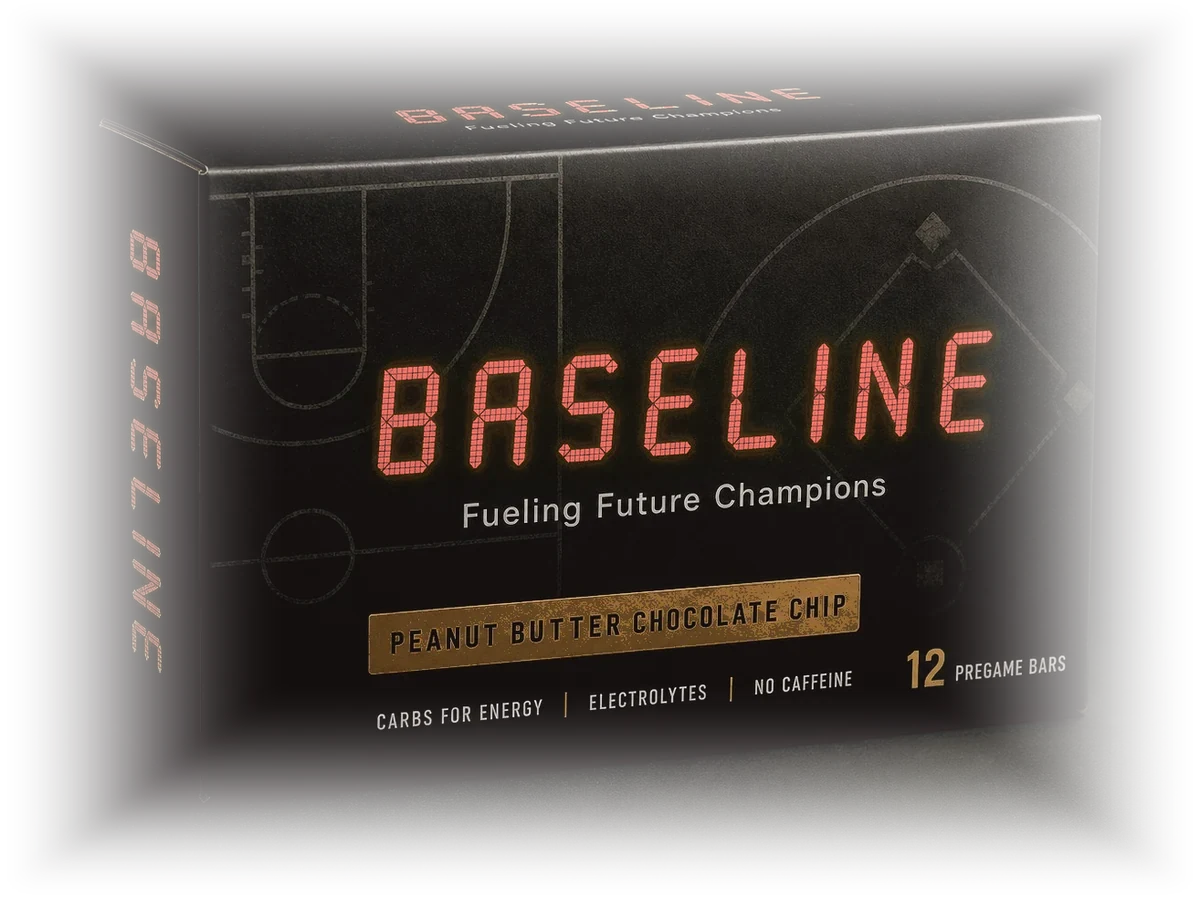
it's just food.
Built for the minutes that matter.
A pregame bar for competitive athletes. Real food energy and electrolytes — no supplements, nothing artificial.
What's actually in it.
Sweet white rice flour, peanut butter, date syrup, honey, oats, granulated peanuts, egg whites, potassium citrate, salt, magnesium malate, cinnamon. Eleven real ingredients. Every one earned its place — nothing in Baseline is there for marketing reasons.
Built different, on purpose.
Most nutrition products designed for athletes were built for adult professionals, then scaled down. Baseline was built from the ground up for one athlete: the competitive 13–18 year old in the hour before game time.
Built for athletes 13–18
Not scaled down from adult products. Youth athletes have different sweat rates, glycogen capacities, and nutritional needs. Baseline starts there.
Zero stimulants, always
No caffeine, no guarana, no performance compounds. Stimulants amplify unpredictably in developing cardiovascular systems. This is a firm principle, not a marketing line.
No banned substances
Every ingredient is a whole food or food-grade mineral. No proprietary blends, no hidden compounds, no risk — for club play or varsity competition.
Carb-timed for the pregame window
Fast carbs from dates and honey are available in 15–20 minutes. Slow carbs from oats sustain blood glucose through both halves. Built around the 60–90 minute pregame window.
Three electrolytes from real food
Sodium (230mg), potassium (322mg), and magnesium — from salt, potassium citrate, and magnesium malate. All three are lost in sweat. All three are replaced here.
Whole food ingredients only
Eleven ingredients. All of them have names you recognize. None of them require a chemistry background to understand. If it's not a real food, it's not in the bar.
No refined sugar
Sweetness comes from date syrup and honey — whole food sources with lower glycemic indices, natural co-factors, and dual-pathway absorption that refined sugar cannot provide.
Protein bar
High fat + protein slows digestion
Protein bars are optimized for post-workout recovery — not pre-game fueling. The fat and protein content delays gastric emptying, which means you're still digesting during the first quarter.
Wrong macros for the pregame window
Most protein bars have 20–30g protein but only 15–25g carbohydrates. Pre-exercise, your body needs carbohydrates — not protein. Protein before a game does nothing for your energy in the next 90 minutes.
Often caffeinated or stimulant-containing
A significant portion of protein bars marketed to athletes contain caffeine, guarana, or proprietary "energy" blends — none of which are appropriate for a 13–18 year old in a competitive sport.
Artificial sweeteners and preservatives
Sucralose, acesulfame potassium, and sorbitol are common in protein bars to keep calories down while maintaining sweetness. These compounds are associated with GI distress during exercise — exactly what you don't want pregame.
baseline.
Digests cleanly in the pregame window
30g of carbohydrates, 7g of protein, 8g of fat — the right balance for pre-exercise. Digestion is mostly complete by warmup. You feel ready, not heavy.
Carbs are the priority
30g total carbohydrates — fast from date syrup and honey, sustained from oats and sweet white rice flour. These are the fuel your muscles will burn in the next 90 minutes. That's what the bar delivers.
Zero stimulants, by design
No caffeine, no guarana, no performance compounds. This isn't a limitation of the formula — it's a deliberate choice made because athletes don't need stimulants to perform. They need fuel.
Nine whole food ingredients
Sweet white rice flour, peanut butter, date syrup, honey, oats, granulated peanuts, egg whites, potassium citrate, salt, magnesium malate, cinnamon. That's the list. Nothing else in, nothing masked by a proprietary blend.
A protein bar is recovery food. Baseline is pregame fuel. The timing window they're built for is completely different — and using the wrong one in the wrong window costs you in the second half.
Sports drink
Single-source sugar — energy gone fast
Most sports drinks use sucrose or glucose as their sole carbohydrate source. Single-pathway absorption tops out at ~60g per hour, and the energy delivered is used up within 20–30 minutes of exercise — long before halftime.
Zero complex carbohydrates
Sports drinks deliver fast energy with nothing behind it. There's no sustained release. The blood glucose spike from a sports drink is followed by a dip — which is exactly the second-half fade athletes (and coaches) know too well.
Incomplete electrolyte profile
Most sports drinks replace sodium and sometimes potassium. Magnesium — required for ATP synthesis and over 300 enzymatic reactions — is almost never included. You lose all three in sweat. A sports drink only replaces two.
Artificial dyes and flavoring
Yellow 5, Red 40, Blue 1 — the colors in popular sports drinks exist to make them visually appealing. They have no nutritional function. Baseline has no artificial colors because there's no reason for them to be there.
baseline.
Dual-pathway carbohydrates
Date syrup delivers glucose. Honey delivers fructose. These use separate gut transporters (SGLT1 and GLUT5), absorbing in parallel — achieving up to 90g per hour vs 60g from single-source sports drinks.
Fast carbs and sustained carbs together
Oats provide complex carbohydrates that sustain blood glucose beyond the first half. The energy from one bar covers both halves of a game — not just the opening twenty minutes.
All three electrolytes replaced
230mg sodium, 322mg potassium, and magnesium — from salt, potassium citrate, and magnesium malate. The complete electrolyte profile your muscles need to fire correctly through the final whistle.
No artificial anything
No dyes, no flavoring agents, no artificial preservatives. The bar tastes like its ingredients because its ingredients are the only thing in it.
A sports drink replaces what you lose mid-game. Baseline tops you off before the game starts. They solve different problems — but if you had to choose one for the pregame window, a bar that provides both carbohydrates and electrolytes does more than a drink that only provides one.
Energy bar
Usually caffeinated
Many energy bars marketed for athletic performance contain 80–200mg of caffeine — equivalent to one to two cups of coffee. In young athletes, caffeine raises heart rate, blood pressure, and cortisol in ways that are amplified and less predictable than in adults.
Refined sugar spike and crash
Glucose syrup, cane sugar, and brown rice syrup are the primary sweeteners in most energy bars. These absorb through a single pathway, deliver a fast spike, and leave blood glucose lower than it started within 45–60 minutes of exercise.
Proprietary blends — banned substance risk
Energy bars frequently contain "performance blends" with unlisted individual doses. For athletes subject to drug testing — at club, varsity, or recruiting levels — this is a real risk. Proprietary blends exist to mask ingredient quantities, not to protect athletes.
Not designed for youth athletes
Energy bars are designed for adult endurance athletes or general consumers looking for an afternoon pick-up. The dosing, the timing assumptions, and the ingredient profile reflect that — not the needs of a 15-year-old playing club soccer on a Saturday.
baseline.
Zero stimulants, full stop
No caffeine, no guarana, no beta-alanine, no citrulline. Baseline provides performance through nutrition — carbohydrates and electrolytes at the right time — not through compounds that stimulate the nervous system artificially.
Natural sugars with co-factors intact
Date syrup and honey deliver glucose and fructose through separate absorption channels, with phenolic compounds, trace minerals, and natural co-factors that refined sugar lacks entirely. Lower glycemic index. No crash.
Full ingredient transparency
Nine ingredients. All listed. No proprietary blends, no hidden compounds. A parent, a coach, or an athletic trainer can read the label in ten seconds and know exactly what's in it.
Built specifically for this athlete
The 60–90 minute pregame window. The competitive 13–18 year old. Club play, travel weekends, tournament days. That is the only use case Baseline was designed for — and the formula reflects every part of it.
Energy bars solve a different problem for a different person. The category was built around adult endurance athletes who need stimulants and aggressive carb loading. A 16-year-old playing a 40-minute basketball game needs clean fuel and clean ingredients — not a product designed for a triathlete.
No other product on the market checks all of these boxes for the athlete you're feeding. That's the gap Baseline was built to fill.
Get early accessFrom the bag, the bench, and the stands.
Early access is open.
Early access gets first pick and launch pricing. We ship soon.
You're on the list.
We'll reach out when Baseline ships.